
Wasatch Front Scouting · Troop 1444/3444
Packing for Camp
Your year-round guide for a Friday-to-Sunday troop campout.
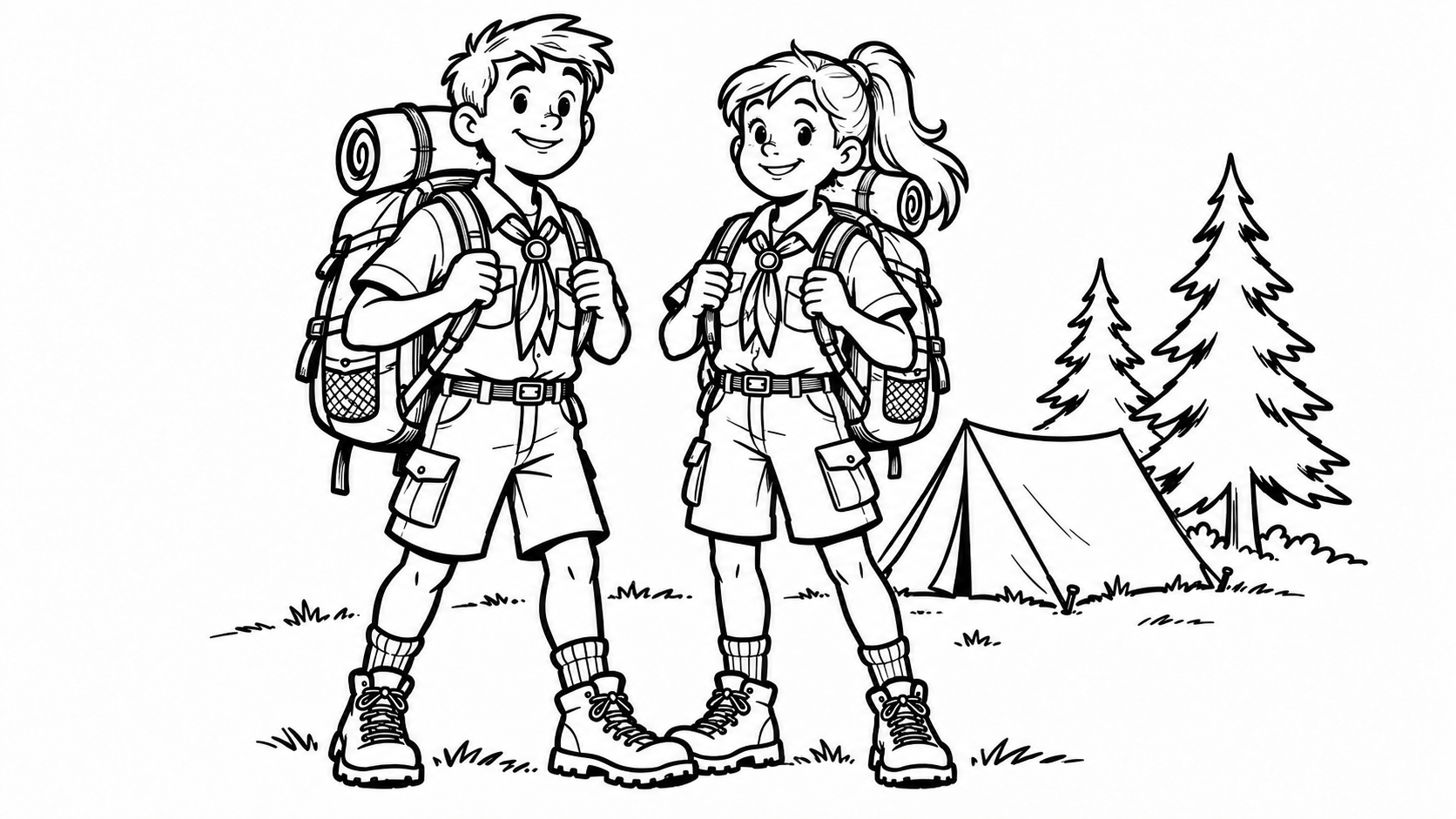
Every campout is a little different, but most of what you pack stays the same. Start with the basics below, add what the weather requires, and check this month's campout information for special gear and instructions.
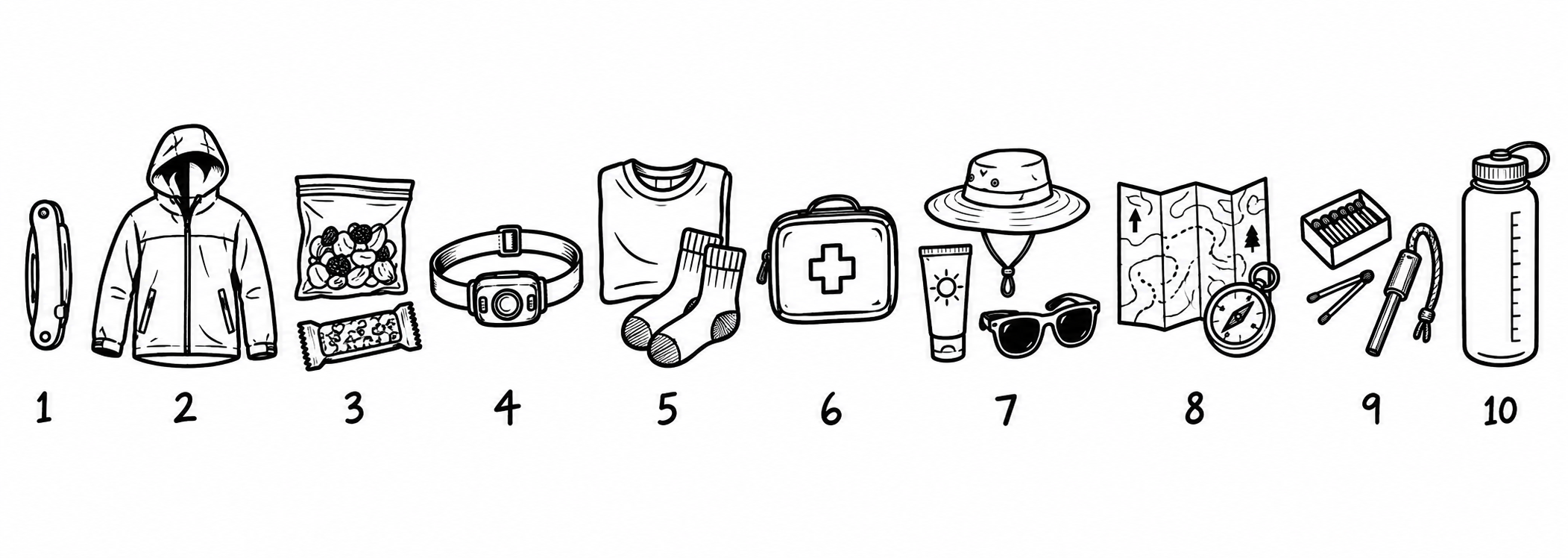
The 10 Essentials
Every campout · every season
The Scout Basic Essentials belong in your daypack on every campout, in every season. Keep them together and ready to go.
- Pocketknife. Bring your Totin' Chip if bringing a knife.
- Rain gear. A rain jacket or poncho, even when rain is not forecast.
- Trail food. Pack a small supply of easy-to-eat snacks.
- Flashlight or headlamp. Bring spare batteries.
- Extra clothing. Pack layers for changing weather and dry spare clothes.
- First-aid kit. Carry personal supplies for blisters, small cuts, and minor injuries.
- Sun protection. Sunscreen, a hat, sunglasses, and lip balm with sunscreen.
- Map and compass. Bring them and practice using them.
- Matches and fire starters. Keep them protected from moisture.
- Water bottle. Bring it filled. For our weekend campouts, bring two.
Training comes first
Bring and use knives or fire-starting equipment only with the appropriate Scout training and authorization. Remember your Totin' Chip and Firem'n Chit, as applicable.
Sleep Warm, Sleep Dry
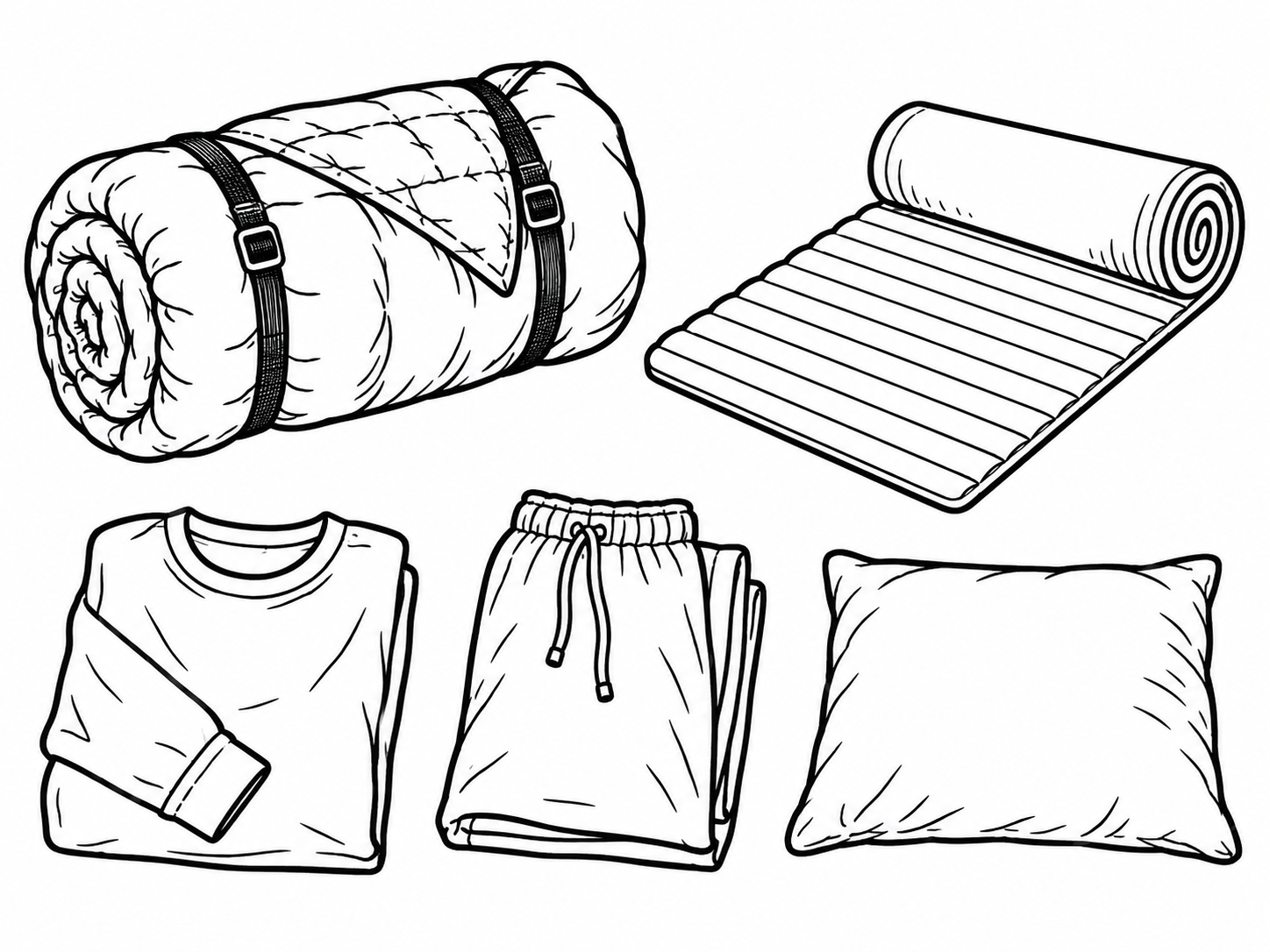
Pack for the expected overnight temperature, not just the afternoon forecast.
- Sleeping bag appropriate for the expected temperature
- Sleeping pad
- Clean, dry sleep clothes
- Pillow, if you want one
Check the campout instructions for tent arrangements and any special sleeping-gear requirements.
Clothing for a Weekend
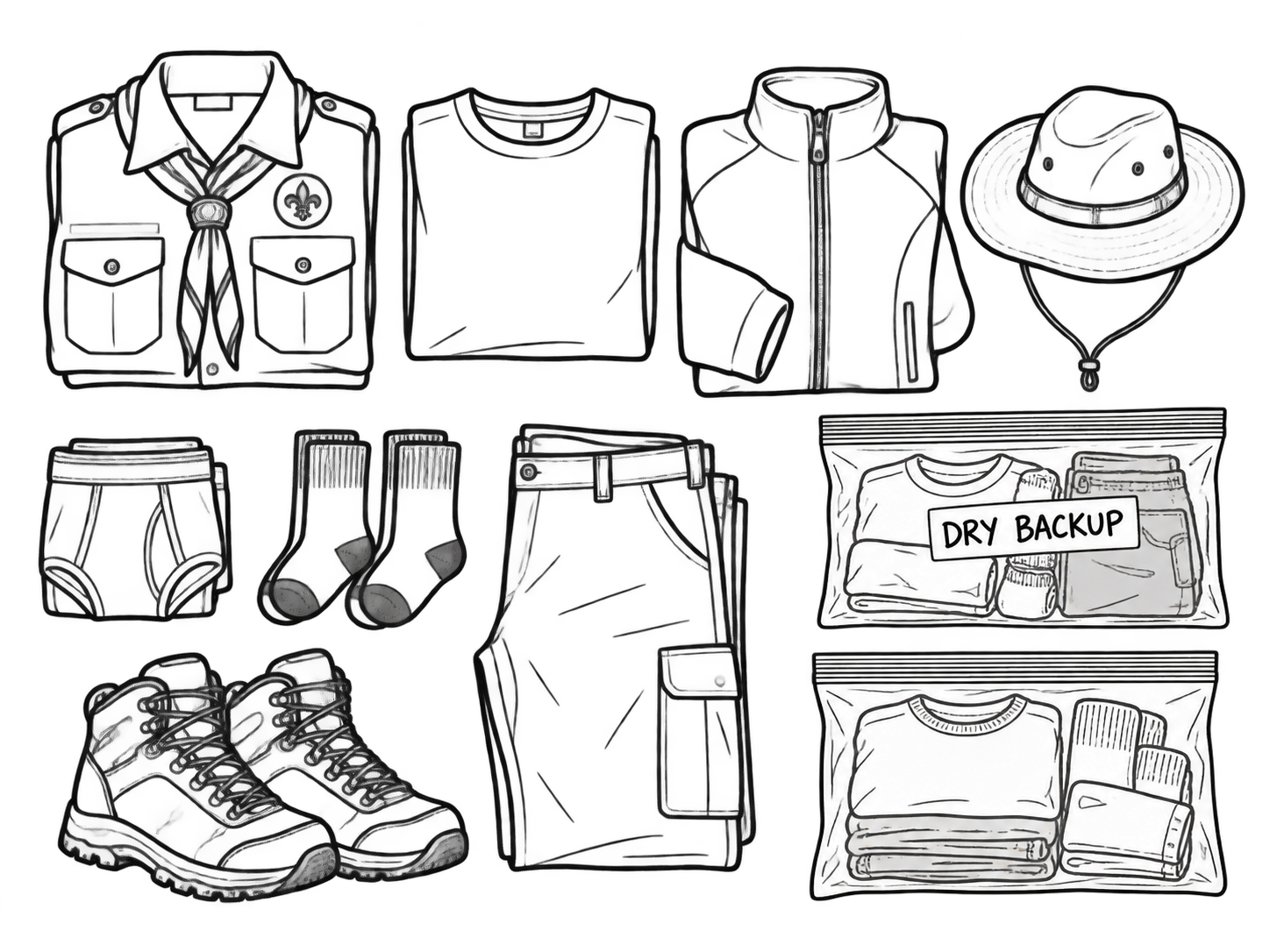
Bring enough clothing for Friday through Sunday, plus one complete dry backup outfit.
- Class A uniform and Class B shirts, as directed
- Underwear and socks, with extras
- Pants or shorts suited to the weather and activities
- Jacket or warm layer, plus a hat
- Durable shoes or hiking boots
Eating, Drinking & Camp Life
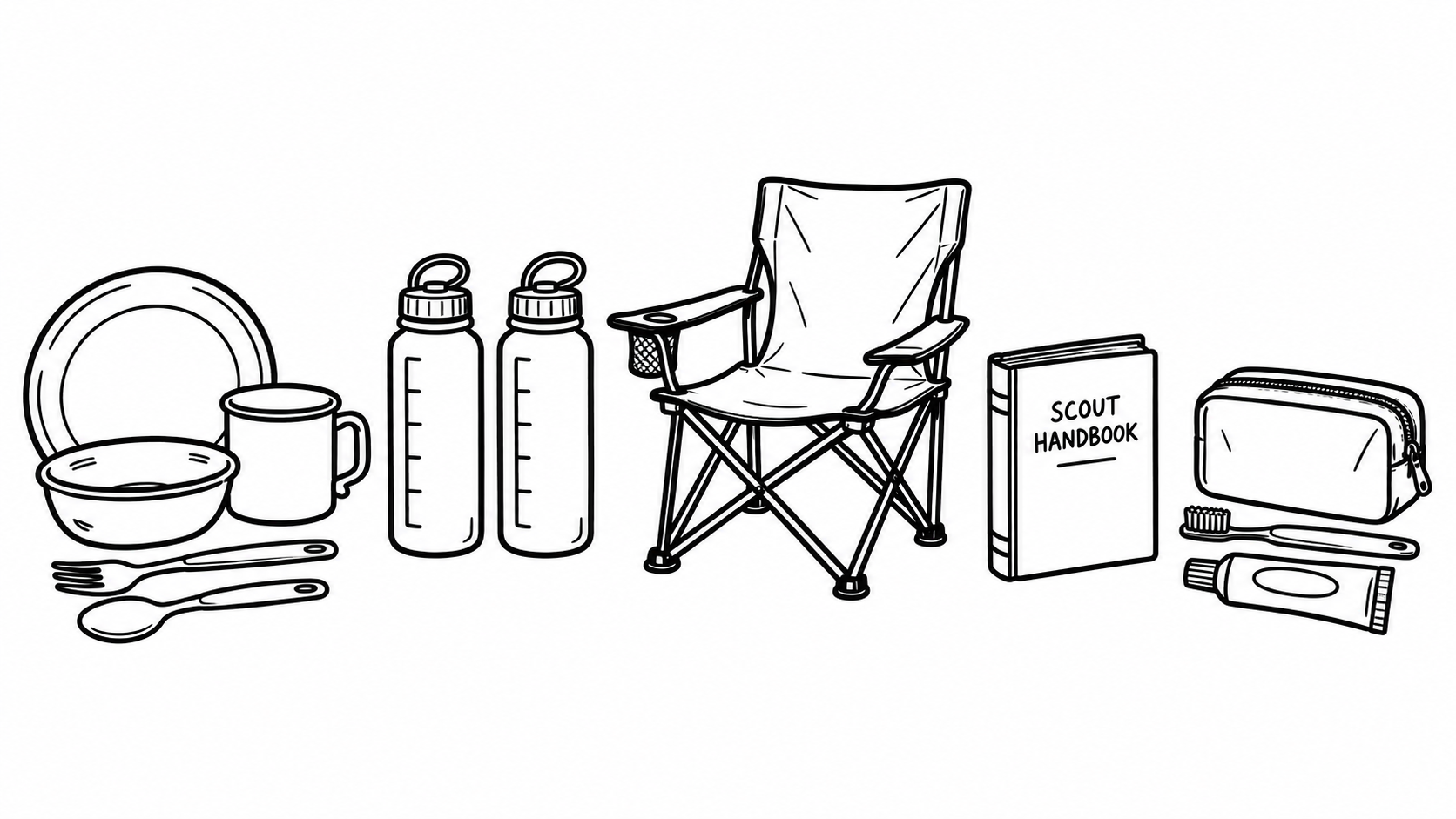
- Mess kit: plate or bowl, cup, and utensils
- Two water bottles
- Camp chair and Scout Handbook
- Personal medications, as applicable; follow the campout instructions
- Toothbrush, toothpaste, and basic personal hygiene items
- Small bag for dirty or wet clothes
Adjust for the Weather
Start with the basics, then add what the forecast calls for. Check both daytime conditions and overnight lows.
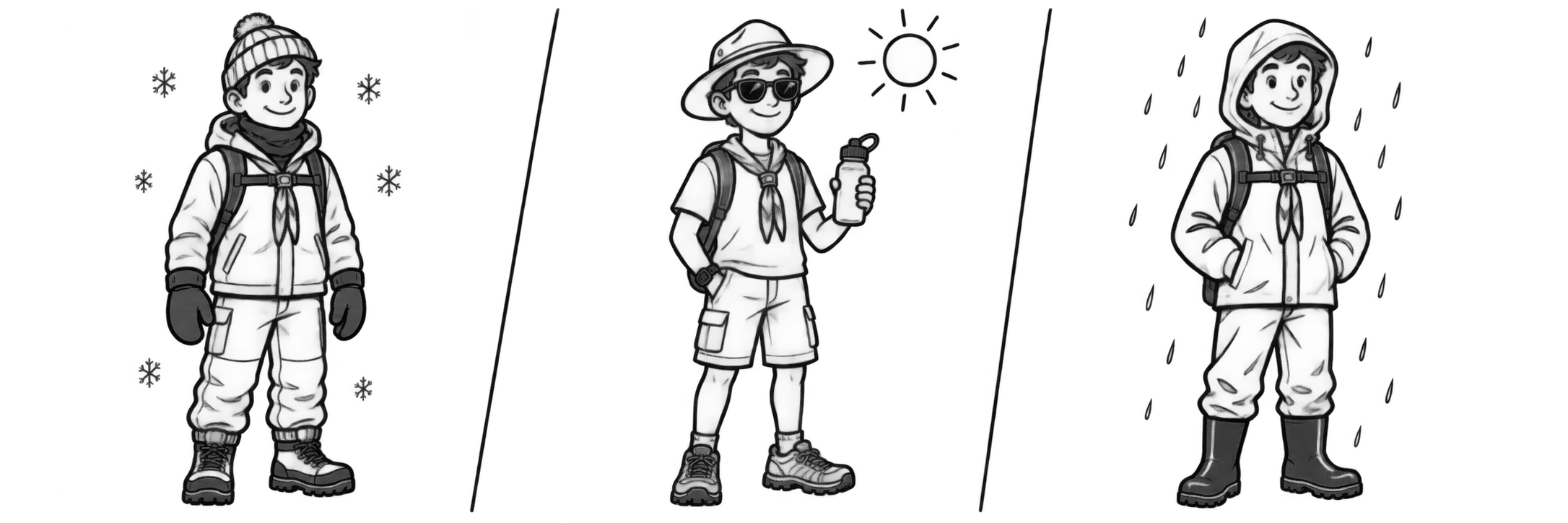
Cold weather
- Base layers or long underwear; fleece, wool, or synthetic insulating layers
- Windproof and waterproof outer layers; snow pants for winter conditions
- Warm hat, neck gaiter, and gloves or mittens plus a backup pair
- Multiple pairs of wool or synthetic socks; insulated, waterproof boots
- Extra dry clothing in zip-top bags or dry bags
- Sleeping bag suited to the forecast and an insulated sleeping pad; follow any rating required for this campout
- Hand or toe warmers, if desired
Hot weather
- Extra water, a sun hat, sunglasses, and sunscreen
- Lightweight, breathable clothing and extra socks
Keep sun protection and water handy. Bring electrolytes if the campout instructions recommend them.
Wet weather
- Rain jacket or poncho; waterproof footwear when conditions call for it
- Extra socks and a complete dry backup outfit
- Zip-top bags or dry bags to protect clothing and gear; a pack cover if needed
Rain gear is one of the 10 Essentials
"The forecast says no rain" is not a reason to leave it home.
Check This Month's Campout
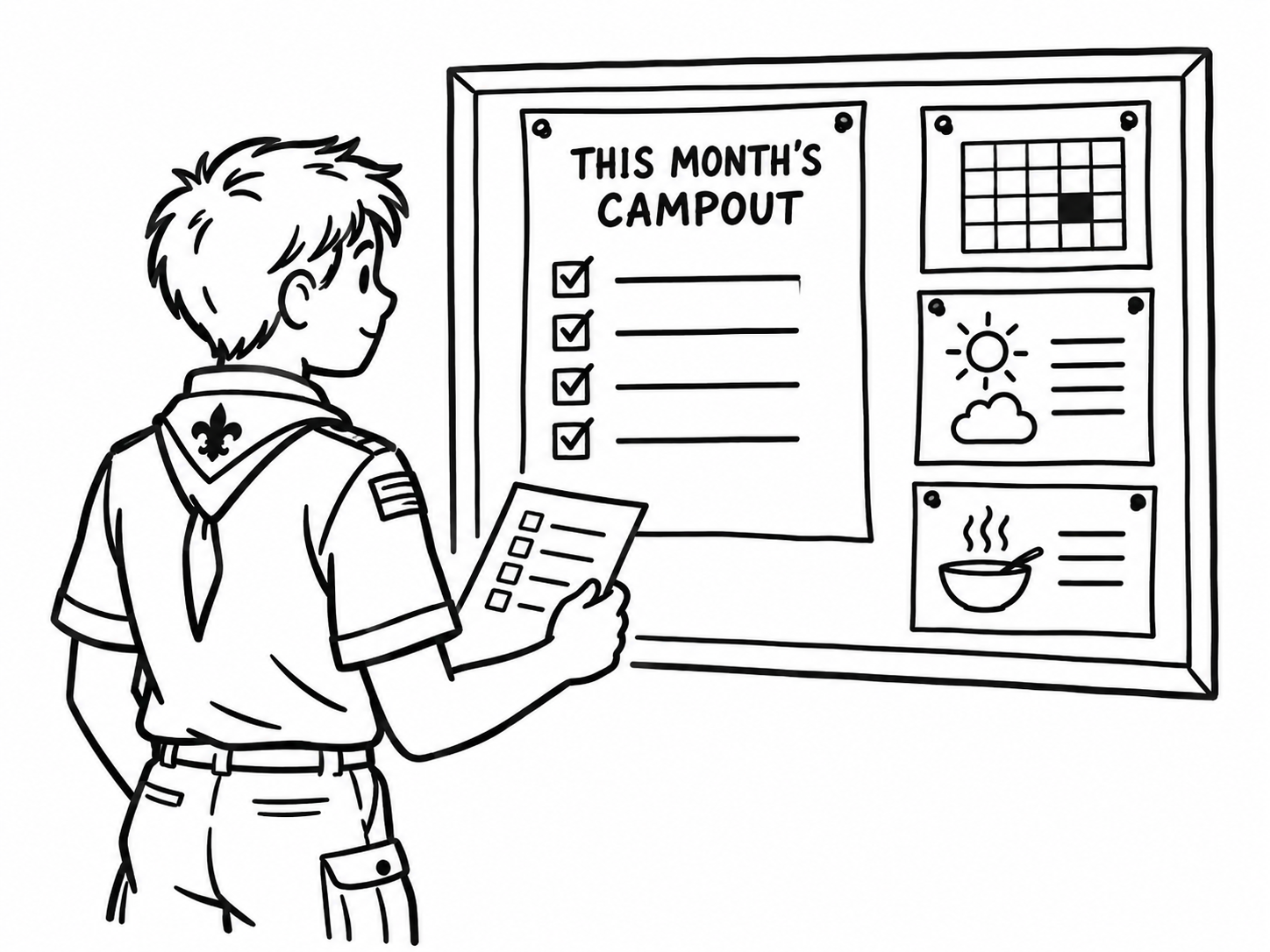
This page covers the basics. Before packing, check the troop's campout information for activity-specific gear, special clothing, required forms, certifications or cards, costs, food assignments, departure and pickup details, and the expected weather.
Heading to weeklong camp?
Use that event's packing guide instead. Weeklong camp has its own gear, program, and paperwork needs.